Missouri School of Journalism to recognize 423 graduates at May 2026 Commencement Ceremony
Editor’s note (May 15, 2026): Barbara Cochran is unable to attend this year’s commencement ceremony. We look forward to rescheduling so she can receive her honorary degree at a future celebration.
The Missouri School of Journalism will celebrate the achievements of its May and August graduates during its spring commencement ceremony at 7 p.m., Friday, May 15, at Mizzou Arena.
The event will recognize students receiving degrees in Bachelor of Journalism, Master of Arts, and Doctor of Philosophy programs. The ceremony is free and open to the public, and tickets are not required. For those unable to attend in person, the ceremony will be livestreamed at commencement.missouri.edu.
The top 10 percent of the School’s graduates will be inducted into Kappa Tau Alpha, a journalism honor society founded at the School of Journalism in 1910. The KTA reception will be held from 10 to 11 a.m. on Friday, May 15, in 88 Gannett Hall, Fisher Auditorium. The new members of Kappa Tau Alpha are:
- Doctor of Philosophy: Vy Luong, Živilē Raškauskaité
- Master of Arts: Quyen Dang, Grace Hervey, Meredith Heuring, Emily Kebert, Mariia Novoselia, Saurav Rahman, Victoria Watson, Tyler White, Cayli Yanagida
- Bachelor of Journalism: Lily Burger, Danielle Carr, Laine Cibulskis, Emma Clark, Matthew Clark, Ashley Dickey, Margaret Feldmiller, Ashley Gaccetta, Austin Garza, Kaitlin Green, Mia Hanlon, Gretchen Helmsing, Briana Iordan, Tanvi Kulkarni, Tori Larner, Kathryn Lopez, Jillian Marquardt, Aiyana Massie, Kavya Ramesh, Kelly Ritter, Ashley Rodio, Hannah Schuh, Lillian Skaggs, Morgan Slagle, Preston Smith, Hudson Summerall, Isabella Trost, Heidi Vial, Olivia Walsh, Laiyi Yi
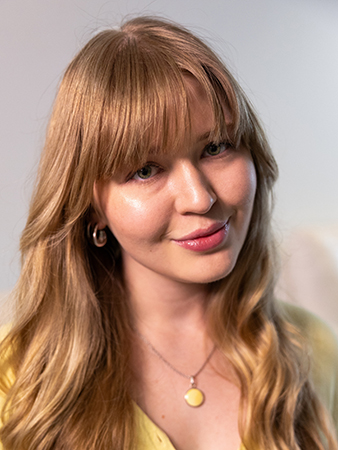
Aiyana Massie, of Lake Ozark, Missouri, will serve as master of ceremonies. Massie is graduating summa cum laude with a Bachelor of Journalism with an emphasis in photojournalism and documentary through the Murray Center for Documentary Journalism. She worked as a photojournalist and documentary reporter for the Columbia Missourian and directed, produced, shot and edited for Method M Films. During her time at Mizzou, she served as president, vice president of recruitment and chapter relations chair for the Beta Eta chapter of Alpha Phi Omega, and as outreach coordinator for the Mizzou Documentary Club. She also contributed to the documentary team for the Missouri Photo Workshop and earned induction into Kappa Tau Alpha.
“I am so excited to serve as the master of ceremonies. I truly look forward to celebrating the wonderful achievements of my peers on such a joyful day,” said Massie. “Looking back on my time at Mizzou, I am so thankful to have received a world-class education in my home state. From fostering a wide array of adaptable skills to developing my competence as an analytical and objective journalist, I feel secure knowing that my education will provide a strong foundation for my work beyond the Missouri School of Journalism.”
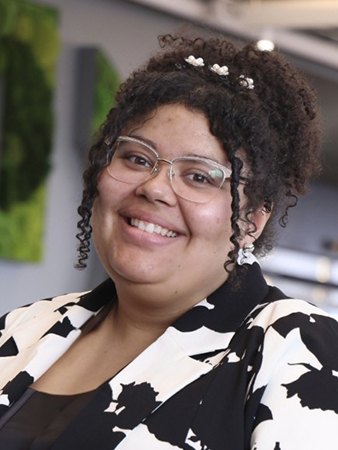
Kaiya Lynch, of Kansas City, Missouri, will present “Thoughts of the Class” during the ceremony. Lynch is graduating with a Bachelor of Journalism with an emphasis in strategic communication and minors in information technology and rhetoric and writing studies. While at Mizzou, she served as a Mizzou Tour Guide and public relations account manager for MOJO Ad, conducted research as a Gregory Scholar, and participated in Matchbook Marketing and the American Advertising Federation. She mentored students at the Missouri University Journalism Workshop and received the Sharon K. Tiley and Gloria Fondren Journalism scholarships. Lynch is also a recipient of the Mizzou ’39 award, which recognizes 39 outstanding seniors for their academic achievement, leadership and service to Mizzou and the community, and was named to the American Advertising Federation’s Most Promising Students in 2026, recognizing 25 high-achieving strategic communication seniors.
“For me, this moment represents all the small moments that added up: late nights editing, meaningful interviews, and the process of seeing ideas come to life,” said Lynch. “Journalism taught me to sit in uncertainty and keep going anyway. I hope my classmates leave with confidence in that process. We’ve learned how to find clarity in complexity, and that’s something that will stay with us far beyond the newsroom.”
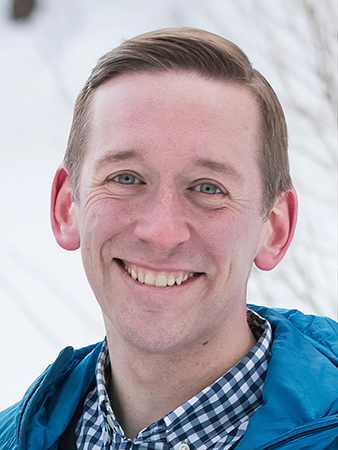
The School is honored to welcome Chase Davis, BJ ’06, as the alumni speaker. Davis is an independent journalist and consultant who has spent more than 20 years working at the intersection of news, data and technology. Most recently, he led the AI Lab at the Minnesota Star Tribune, where he also held senior roles overseeing the newsroom’s data, visual and digital journalism teams. Prior to that, he led the Interactive News team at The New York Times and began his career as an investigative and data reporter in Texas, Iowa and California.
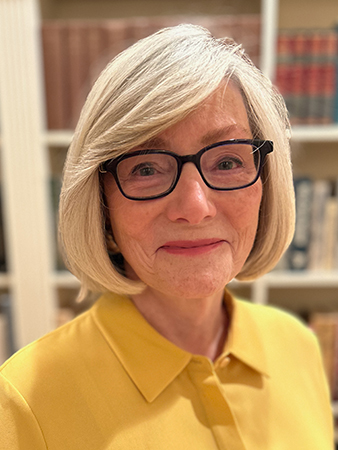
The School will also confer an honorary degree upon Barbara Stubbs Cochran, an award-winning journalist whose career has spanned the print, broadcast and nonprofit worlds. Cochran currently serves as president of the Fallen Journalists Memorial Foundation, which is working to build a monument in Washington, D.C., to honor journalists who have lost their lives in the line of duty. She previously served nine years as the Missouri School of Journalism’s Curtis B. Hurley Chair in Public Affairs Journalism and spent 12 years as president of the Radio Television Digital News Association (RTDNA). Earlier in her career, she served as vice president and Washington bureau chief of CBS News, becoming the first woman to head a network bureau in Washington.
‘Thoughts of the Class,’ Kaiya Lynch
E pluribus unum. Out of many, one.
It’s stamped onto every U.S. coin; something small, easy to overlook but built to last. Coins pass through countless hands, pick up scratches, lose their shine a little but they never lose their value.
In a lot of ways, that feels familiar.
When we first arrived at the Missouri School of Journalism, we came with ambition and curiosity, bright-eyed and ready to make our mark. We stepped into a legacy much bigger than ourselves: the world’s first school of journalism, grounded in the Missouri Method. From day one, we didn’t just study journalism; we lived it.
We learned in motion. In the rush of newsroom deadlines. In the quiet pressure before hitting “publish.” In the moments where accuracy mattered more than speed, and integrity mattered more than recognition.
We’ve all refreshed a page like our grade, our future and our sanity depended on it; and learned that “one quick edit” turns out to be more time intensive than planned. Places like The Columbia Missourian, KBIA, KOMU, AdZou, NSAC and MOJO Ad became more than learning labs—they became home. Every late night chasing a breaking story, every sprint across campus with camera equipment, every interview that challenged us to listen more closely; these weren’t just assignments. They were affirmations that we were exactly where we were meant to be.
And through it all, we learned something deeper than technique. We learned responsibility.
Responsibility to tell stories that matter. Responsibility to represent voices that might otherwise go unheard. Responsibility to seek truth, even when it’s complicated, uncomfortable, or inconvenient.
Now, as we stand on the edge of what lies beyond these columns, we face an industry that is evolving faster than ever. The landscape is uncertain. Trust in the media is fragile. Technology is transforming how stories are told and who gets to tell them.
But if there’s one thing this class has proven, it’s that uncertainty does not intimidate us, it motivates us.
Because we are not just graduates of the J-School; we are products of its purpose. We have learned not just how to report, but why it matters.
We earned these stripes.
And wherever we go next—whether in newsrooms, agencies, or spaces that don’t even exist yet—we carry with us the same commitment that brought us here: to illuminate, to question, to connect and to serve.
E pluribus unum.
Out of many drafts, one final story.
Out of many challenges, one strong foundation.
One class. One legacy. One shared responsibility to ensure that the light never goes out.
Thank you.
Alumni Speaker, Chase Davis, BJ ’06
Congratulations, class of 2026!
It’s fitting that we’re on the floor of Mizzou Arena tonight because graduating from the world’s best journalism school is absolutely a team sport. So congratulations, also, to your family and friends whose love and support helped you earn your seat here today.
I was promised when I graduated from Mizzou 20 years ago that in the real world, nobody would care about my GPA. Which must be true because otherwise I wouldn’t be standing here.
So thank you, Dean Kurpius, for the honor of speaking here tonight. And to the faculty and staff for not talking him out of it.
Finally, I’m going to invoke a bit of privilege and thank my own family. My wife, Torey, and son, Jack, and especially my parents — whose own love and support have provided me with strong values, a great education and an interesting life.
I’m not going to bore you with my resume, but in an effort to establish the bare minimum of credibility, I will offer you three highlights.
One: I have never been great at what I do. I was a mediocre student, for which I mostly thank the Maneater. And I have worked, at various points, as a perfectly adequate reporter, editor, data journalist, software engineer and executive. Somehow I have made a career out of being what Patagonia founder Yvon Chouinard would call an “80 percenter” — someone who gets B-minus good at something, gets bored, and then moves on to something else.
Second thing: I have taken a pay cut or a demotion for most of the big job changes I’ve made. I thought the biggest would be leaving a great job at The New York Times to help lead the transformation of my hometown newspaper in Minneapolis. But then I outdid myself last summer, when I left that job with nothing lined up at all.
Finally, you could argue that I’m technically unemployed right now. Because last year I decided to try being an entrepreneur, working with local newsrooms to apply emerging technologies in ways that respect journalistic values. Fortunately it’s gone well enough that I finally managed to pay off my student loans last month. Sorry to tell you this, but yes, it takes a while.
All of this is to say: If there is such a thing as a “path,” I am certainly not on it.
Now, normally they invite impressive people to do things like this. But I think there’s a good reason why you’re getting me instead. Because in one way or another, I have spent my entire career at the sharp end of journalism and technological change.
For those of you playing the drinking game, I’m sorry: this will be my only mention of generative AI this evening. I bring it up only because it’s the latest stark reminder that journalism and strategic communications continue to change in unpredictable ways. That’s been true for my entire career, and I suspect it will be even more true during yours.
So that’s what I’d like to talk about here: How to deal with change. Because whether you signed up for it or not, it is surely what awaits you once you leave this place.
Tonight I hope to offer you just one useful thought on how you might make the most of it.
But first let’s make this concrete:
One day you’ll wake up, make your coffee, and head into the office. And it’ll be just another regular adult day, until you look in your inbox and see a 9 a.m. message from your company’s CEO with the subject line “Our Path Forward.”
And you’ll open this note, and it will start with “Team:” — which is never a good sign. And it will go on to describe, in language vetted by legal and HR, the exciting “pivot” your company is about to make. Maybe you’re pivoting to video. Or pivoting to AI. Or pivoting to the Metaverse, which by this time will have become cool again.
And it’ll be hard to take it all in. Because whatever comfortable routine you’ve settled into will be thrown into question by this jargony note filled with Oxford commas, terrible cliches, and other crimes against language your J-School professors would never have allowed you to commit.
Maybe you’ll be excited by this change, or see opportunity in it. Or maybe you’ll burn with the righteous urge to throw your body onto the gears of capitalism.
Either way, you definitely won’t get much done the rest of the day, so you’ll wrap up a little early and drive home. And in this first quiet moment you’ve had to process things, you’ll ask yourself: “What does this mean for me?”
And I don’t know about you, but I’ll tell you what I’ve done at times like this.
I’ve freaked out! I’ve wondered whether I’ll still have a job, whether my skills still matter, whether the work that I’ll be asked to do is work that I’m passionate about.
Some of you might be blessed with more confidence than me, but change has a way of tapping into our deepest anxieties.
When we feel anxious or uncertain, it’s natural to want the feeling to go away as quickly as possible. But in our efforts to do so, it’s easy to start making tradeoffs without really thinking them through.
You hear this in the cliches. Adapt or die. Roll with the punches. The subtext is always the same: Absorb the change. Accept it. Rebrand it as resilience and keep moving forward.
It’s one thing if that means challenging yourself or learning something new. But what if the thing you’re adapting to makes you less honest, less curious, or pulls you away from the work you actually care about?
We don’t always say this out loud, but adapting to change always comes with costs. Sometimes they’re worthwhile. Sometimes they’re not. The danger comes when we pay without realizing it — when we trade a little bit of ourselves for a little bit of safety.
I have made that bargain before. It’s impossible not to.
But I’ve also figured out that there’s an alternative. And it’s this:
Treat every moment of change as a moment of choice.
That sounds simple and obvious, but it’s actually incredibly hard. Because the forces acting on your motivations, whether from your own head or the world around you, will gladly steer you in ways that serve their own interests.
The trick is to learn to recognize change not as a source of anxiety, but as a tool to focus your awareness.
I’ll give you a recent example:
Last year I left a great job at a place I cared about with nothing lined up. I’d been there for a while. My gut had been telling me that it was time to go, but I had been putting it off because I didn’t want to let people down, the job market wasn’t great, and frankly I was a little scared.
And then a couple of my bosses, who I really admire and respect, decided to leave. It was uncomfortable. It threw my future into question. And yes, I freaked out a little. But it also clarified very quickly what months of overthinking couldn’t: the safe thing and the right thing were pointing in different directions.
A week after my last day I was in Banff, Alberta, at the starting line of the Tour Divide — a 2,700-mile unsupported mountain bike race from Canada to Mexico. Which, to be clear, is not what most career counselors would recommend.
It took me about a month to finish. And when you spend that long alone in the mountains, you notice the strange things your brain does under stress. Like one minute you feel invincible. An hour later you feel awful. And between those moments, literally nothing about your situation has changed.
Your neurons are just firing. Turning uncertainty into stories about who you are and whether you’re okay.
A couple weeks in, I started to understand that this was just a condensed version of adult life. Those stories in your head aren’t always truth. They’re your brain trying to make sense of discomfort and uncertainty.
And if you can stay aware of that process, it creates space to make decisions more intentionally.
If you do that, funny things start to happen. Like taking a pay cut for a job you believe in. Or taking risks other people find unreasonable. Or embracing a change that’s unpopular — or fighting one that seems inevitable.
I don’t offer this to suggest you quit your job and ride your bike across the country. You came here with your own values and passions, which are almost certainly more responsible than mine.
I offer it because I find it deeply empowering. Careers in journalism and strategic communications are full of change and uncertainty. More than most.
But if you can learn to meet those moments with awareness, change stops feeling like a force being inflicted upon you. It becomes a chance to check in with yourself about what matters, who you want to be, and what kind of life you want to build.
Thank you again for the honor of addressing you here this evening. I am so excited for you and your families. I’m proud to be a member of the Mizzou Mafia with you, at least for so long as you’ll have me.
I wish you one hell of an adventure. And I can’t wait to see you out there.
Updated: May 21, 2026