74 Graduates to be honored at Missouri School of Journalism ceremony Dec. 20
Pulitzer Prize-winning alumna Melissa Farlow to deliver commencement address
The Missouri School of Journalism will celebrate 74 graduates during its commencement ceremony at 11 a.m., Saturday, Dec. 20, in Jesse Auditorium. Seating is open and tickets are not required. A livestream will be available on the Mizzou Graduation and Commencement live streaming page.
Graduate degrees will be awarded to 16 master’s students and one doctoral student. Among the 57 undergraduates, 23 focused on journalism and 34 on strategic communication. Thirty-four graduates earned Latin honors by achieving at least a 3.5 GPA for their last 50 credits.
The top 10 percent of graduates will be inducted into Kappa Tau Alpha, the journalism honor society founded at the Missouri School of Journalism in 1910. A reception will be held from 10 to 11 a.m., Friday, Dec. 19, in the Fred W. Smith Forum, Room 200, at the Donald W. Reynolds Journalism Institute. The 10 new members are:
- Doctoral: Damilola Oduolowu
- Master of Arts: Jiaxin Gong, Cassidy Reaka, William Wehmer
- Bachelor of Journalism: Maleigha Billings, Katherine Grawitch, Paige Halter, Elaina Hogg, Robert Hummel, Karissa Wichmann
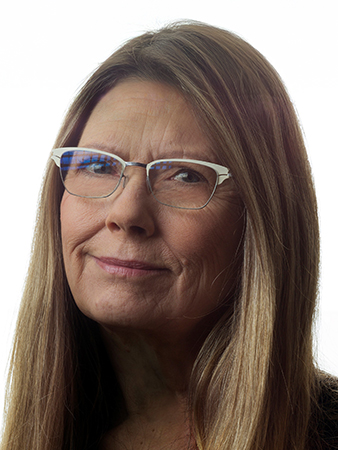
The alumni speaker is Melissa Farlow, MA ’94, a Pulitzer Prize-winning photojournalist whose work has appeared in National Geographic, The Washington Post, LIFE, Smithsonian, and more. She has completed over 20 National Geographic projects across the Americas and Europe, focusing on people, landscapes, and environmental issues. Her book Wild at Heart grew from extensive travels in the American West photographing public lands, along with her passion for horses.
Farlow’s photography is featured in more than 70 books, including several National Geographic titles. She was named Distinguished Alumni by the Indiana University School of Journalism, and inducted into Indiana Journalism Hall of Fame and the Missouri Photojournalism Hall of Fame. She has taught photojournalism at the University of Missouri, served on the Missouri Photo Workshop faculty for 25 years, and mentors emerging photographers through Vital Impacts and The Photo Society.
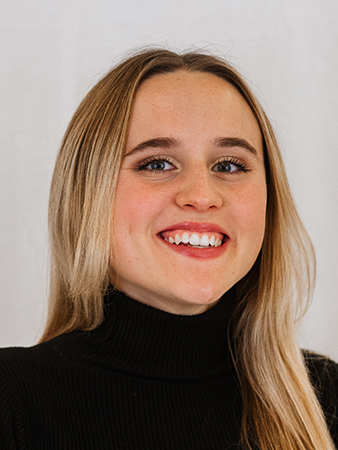
The master of ceremonies will be Maleigha Billings. Originally from Kansas City, Missouri, Billings is earning a Bachelor of Journalism with an emphasis in strategic communication, and a minor in business. She served as an account manager for MOJO Ad, was active in Matchbook Marketing and the American Advertising Federation, and earned the Sharon K. Tiley Journalism Scholarship, recognizing high-achieving female strategic communication students. She is grateful to the journalism school faculty and staff for their support throughout her time at Mizzou.
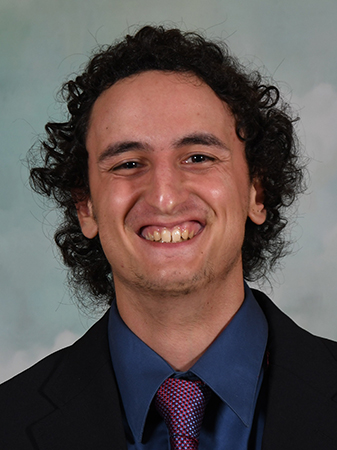
Jake Aron will present the “Thoughts of the Class.” Aron is earning a Bachelor of Journalism with an emphasis in strategic communication and a minor in entrepreneurship and innovation. Aron served as a public relations account manager of content at MOJO Ad, director of recruitment for Transfer Experience and Advising Mentors (TEAM) organization, and was a member of the Public Relations Student Society of America. He plans to pursue a career in public relations after graduation.
Jake Aron, ‘Thoughts of the Class’
Let me tell you about today’s press release.
The dateline reads December 20, 2025, in Columbia, Missouri, home of the world’s first journalism school, in case you somehow forgot. It’s the place where we never let M-I-Z go unanswered at a sporting event, reminding us that we’re part of something bigger than ourselves. It’s where we’ve grown our skills and found our voices.
The headline of this press release reads, “The Missouri School of Journalism Class of 2025 Walks the Stage.”
Next, we go to the lead paragraph. This is where we say how hard we worked. It’s where we say that after years of writing and shooting on a tight deadline, asking strangers for interviews and saying to ourselves “just one more edit” for the twelfth time, we did it. We survived the Missouri Method.
The body of this press release outlines everything we’ve accomplished. We’ve reported live to bring Mid-Missourians coverage they could count on, pitched to real clients helping them understand the youth and young adult market, taken photos that captured moments words couldn’t, written stories that made people feel something real and created social media content that actually started conversations. Sure, we wanted good grades. But we also wanted to do work that mattered. And we did.
Like any good press release, this one includes a quote. This quote is about the people. The professors who pushed us to produce better work, the strangers who became friends through classes and group projects and the family, by blood or by bond, who told us to keep trying even when times were tough. To you, we say thank you. Thank you for your guidance, your kindness and your support.
We then move to the call to action, which is twofold. For everyone else, it’s to pay attention because we’re ready. We’re ready to lead, create change and shape the stories that shape our industries. And for us, it’s to keep telling stories that matter. Stories that uncover truth and make a difference.
And finally, the boilerplate, the “about us” section. Who are we? We are storytellers. We are achievers. We are believers in the power of words, images and ideas. And as of today, we are graduates of the Missouri School of Journalism.
Thank you.
Melissa Farlow, MA ’94, alumni speaker
Good morning Graduates, Faculty, Parents, Family, Friends and Honored Guests. Thank you, Dean Kurpius, for your kind invitation.
Years ago, Randy Olson and I left newspaper jobs to come to this university where we shared a teaching job, an office, and even a desk Randy found in the boiler room along with the POYi photo archive. This was a new chapter in our lives, and last month we celebrated 39 years of marriage, so Columbia is near and dear to my heart.
It is an honor to return to Mizzou. But I must confess, I am THE most unlikely commencement speaker. Last time I was on this stage, I handed out diplomas as a new instructor while the faculty sitting behind me quietly debated whether I should even be admitted to graduate school. I scored poorly on the GRE, and let’s just say I didn’t have a 4.0 as an undergrad. Yet, I arrived here as a credible journalist and Pulitzer winner.
The next two years we expanded our journalistic skills, earned our Masters degrees, and left the university to return to a newspaper. Then, we both photographed over a combined 50 years for National Geographic—proof that the path that starts here may lead you to places you cannot yet imagine.
I didn’t set out to be a journalist; I became one by accident. I majored in “undecided” until my junior year at Indiana University, when I signed up for a photojournalism class to fill my schedule. That class changed everything — I was inspired. My parents were relieved I finally declared a major, but wondered, “What is she going to do? And the truth is, I didn’t know. I was absolutely unprepared for the “real” world.
In many ways, it was the best start possible. If four decades in this field have taught me anything, it’s that no one really knows exactly how to begin. “Work hard, show up early, stay late, and don’t complain.” Experience taught me it is equally important to stay curious, passionate and humble.
I’m not sure if someone saw potential, passion, or persistence, but I was offered an opportunity. You will be, too. It may not look like what you imagined or what your parents hoped for you.
Recognize it when it appears, and walk through that door with courage.
You will make mistakes. What matters is how resilient you are because there likely will be more failures than successes. Life will test you.
My first job out of college was on the staff at the Courier-Journal and Louisville Timesnewspapers. My first week of work, I was arrested for standing my ground with a cop. I broke no laws but I was locked up, fingerprinted, mug shot. I made my one phone call to the newsroom, and the editor thought it was a prank. No one on the weekend staff knew I was a new hire. And I was mortified when the next day my parents read about my arrest in the newspaper–but that is another story.
Months later while working night shift, I was diverted from a high school football game to a disturbance in the streets that erupted into a riot. Rocks pelted my car. I was chased by an angry mob. I remember running to escape, a heavy camera around my neck, boots pounding the pavement. It was like a movie playing in slow-motion with distorted sound. “Kill her! Kill her!” My mind raced with fear.
Court-ordered busing ripped an open wound in the soul of Louisville. The KKK marched in the downtown outside the newspaper, and rallied inside public schools. Our staff was awarded for our coverage, but I am haunted by these memories. Faces of children peering out the windows of the school bus. Innocent. Frightened. Protesters yelling. I was stunned by the raw racism.
Those moments taught me journalism’s real purpose: document the narrative of our times, and amplify voices to those whom history might overlook. I hope your start begins smoothly, but I am grateful for the twist of fate that landed me in that tumultuous time. It caused me to become wiser and more compassionate. It awakened a commitment to photograph the things that matter.
At a women’s prison, I met a domestic violence survivor serving time for reckless homicide after shooting her boyfriend in self-defense. My world was innocent and privileged in comparison, and I wanted to understand the more complicated story that shaped her violent life. Encouraged by editors, I convinced her and the warden to allow access to photograph freely inside the penitentiary. After two years, she made parole. I was ending my story when I realized it was HER story, and the next chapter focused on her struggle to start a new life.
Those early years taught me resilience, ethics, and how to earn trust—the greatest privilege in journalism.
Newspapers grounded me in community-based stories that led to National Geographic’s global reach. Learning about each assignment was like going to school all over again—becoming an expert to know all about wetlands, invasive species, clear cuts, mining, public lands, nuns, sex workers, matriarchal cultures, mustangs and Thoroughbred horses.
Your work will vary from mine, but one truth remains: your community will shape you. I am grateful to the editors who guided me, and for the camaraderie I shared with fellow creatives. As newsrooms and workplaces shrink, and collaborative spaces grow scarce, I’ve returned many years to the Missouri Photo Workshop to give back in thanks to those who helped me. I leave inspired by magic that happens that week. Welcome critiques that push you to do extraordinary work. Mediocrity is a slow death.
University classes prepared you well for professional work, but they can’t fully capture the range of experiences you may face. From small-town Indiana roots, I never dreamed of eating worms for breakfast with the Mexican military in Chiapas, or coping with a flea infestation from livestock that slept inside an Ethiopian hut. I camped in Alaska with grizzly bear researchers, and never dreamed I’d help move a 400-pound bear they darted to study that woke up early from the tranquilizer.
I learned to do aerial work, and there were magical flights over landscapes in the Okefenokee Swamp, over red rock canyons in the American West, and over New York’s Central Park, but I was terrified in the Alps circling the Matterhorn in a whiteout. Helicopter doors were removed for photographs, and when the cockpit windows iced over, the pilot was flying blind.
If journalism has an allure, it is not the war stories, bravado or glamour. It is not for awards, and certainly not for the pay. It is working on a project, no matter how small, that may help people understand each other a little better.
Photographing a polygamous family in Mali opened my eyes to different cultural norms; the wives cared for each other’s children sharing the hard, physical labor that fell entirely to women. Timbuktu is a harsh and barren land where people need each other to survive. I questioned whether they were happy—until I heard families on the rooftop singing together under the stars at night. Journalism in the graduate school of life.
News highlights complex, interconnected societal challenges—conflict, climate, economy, addiction, inequity, health care, democracy, technology’s reach, and more—it is easy to feel overwhelmed. What difference can one person make?
Use your skills to address, examine, and clarify what is at stake. You can’t resolve all issues, but you can light the way when others see only darkness. Bring hope.
Journalism faces deep challenges: shattered business models, gutted newsrooms, evaporated trust. Misinformation spreads faster than truth. Yet, I know you are entering this field with excitement, and your eyes are wide open.
Be strong, because credibility endures, and the fundamentals remain: honesty, accuracy, empathy, ethics, and the courage to amplify many voices. Your studies are varied—print, broadcast, convergence, photojournalism, magazine, public relations and advertising—but together you can create the collaborative spirit to face these challenges. Much like the women in Mali, you need each other.
Your generation—coming of age amid dizzying change—has tools and skills with instant global reach, a command of multimedia storytelling, and an openness to craft new forms of communication.
Technology may amplify your reach or speed your process, but it will not replace seeing, listening, trusting, and feeling. AI can crunch data, help organize material, and find your spelling errors. Only you can witness events and ask the questions to unlock a story. Only you can stand in someone else’s shoes to experience their world. Only you can build trust. Democracy cannot survive without you.
I’ll leave you with advice I received from the British war photographer, Donald McCullin, who spotted my insecure, student naïveté.
“If you want to be a photographer, no one can stop you. But you must believe in yourself. And you must have a purpose.”
Whether you write, edit, photograph or film, always believe in yourself. Work with commitment, intention, and purpose.
Congratulations, graduates. It’s your turn.
Updated: December 22, 2025