Melissa Farlow, MA ’94, to deliver December commencement address for Missouri School of Journalism
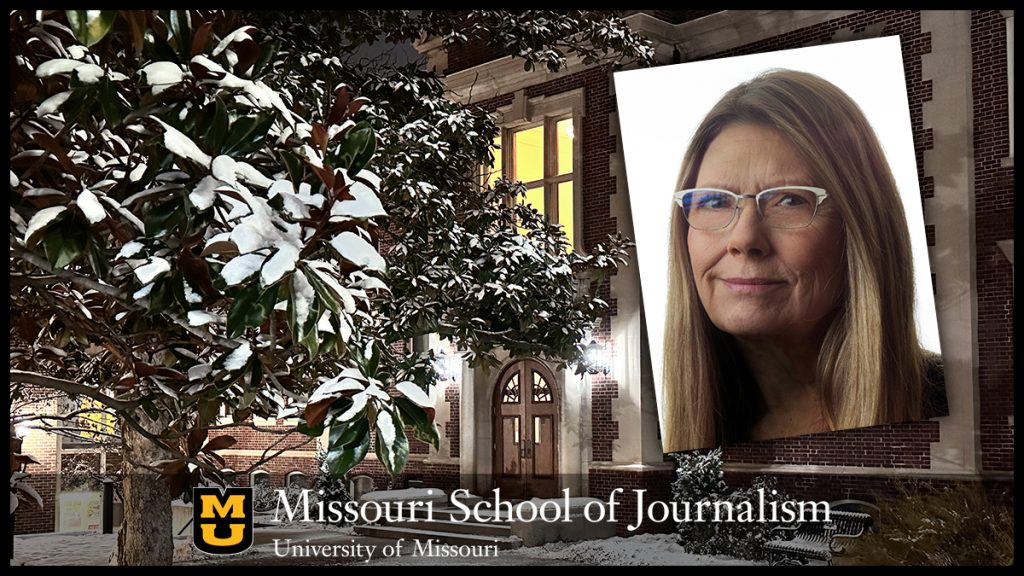
COLUMBIA, Mo. (Dec. 16, 2025) — Pulitzer Prize-winning photojournalist Melissa Farlow, MA ’94, will deliver the commencement address at the Missouri School of Journalism’s winter commencement ceremony Saturday, Dec. 20. It will be just the latest way she has given back to her alma mater during a career in which she has never strayed far from the roles of mentor and teacher.
“Melissa’s career is a testament to the power of visual journalism, and I’m thrilled to welcome her back to the School of Journalism,” said David Kurpius, dean of the School. “As someone who has devoted so much of her time to helping others learn to follow in her footsteps, her perspective has much value for those who are preparing to enter and lead the industry.”
Farlow — whose portfolio includes photographing more than a dozen National Geographic stories, two books and 16 years of staff photography for newspapers in Louisville and Pittsburgh — has served as an instructor at the annual Missouri Photo Workshop 25 times since first experiencing the week-long community photography event as a master’s student.
And as the winner of multiple Pictures of the Year (POY) awards, she has also repeatedly served as a judge for the international photography competition — now administered by the School’s Reynolds Journalism Institute — and its sister competition, College Photographer of the Year.
“With teaching, I had to think about what was really important and what I wanted to pass on. There was a lot of soul-searching that went into trying to share what I believed about fundamentals and ethics that I was able to verbalize.”
Melissa Farlow
By the time Farlow began attending graduate school at Mizzou in the mid-1980s, she had already earned the Pulitzer Prize as part of a team at the Louisville Courier-Journal for a story covering public school desegregation nearly a decade earlier. But her desire to balance the accomplishments of her career with mentorship of younger students began in earnest when she started teaching photojournalism at Mizzou during graduate school.
“With teaching, I had to think about what was really important and what I wanted to pass on,” Farlow said. “There was a lot of soul-searching that went into trying to share what I believed about fundamentals and ethics that I was able to verbalize.”
That philosophy was born in part from her experiences as a student, during which School of Journalism instructors became influential both in and out of the classroom. A prominent example was Angus and Betty McDougall, the namesakes of the McDougall Center for Photojournalism Studies and personal and professional partners for 70 years. Farlow had come to Mizzou with her own partner, photojournalist Randy Olson, and the pairs nurtured a cross-generational connection founded upon a mutual fascination with visual communication.
“Angus and Betty were in their 80s at the time, and we got to be really good friends with them,” Farlow said. “That kind of passion about journalism and photography was infectious to us. We would find ourselves at their house until three in the morning debating things. It was a really wonderful experience.”
“I was just talking to a photographer friend, and he said, ‘I look at us more as historians.’ A lot of photographers are not really careful about the context in which they’re taking the photograph, so someone looking at it can understand that place and time a little better. That information is important.”
Melissa Farlow
Then there was Russell Lee, a legendary photojournalist who had made a name for himself as one of the Farm Security Administration photographers who documented life during the Great Depression. Lee was part of the effort to get the Missouri Photo Workshop off the ground in its early days and stayed on as a faculty member for many years, which was how he crossed paths with Farlow.
“Russell Lee was one of the older faculty members, and he commanded a lot of respect,” Farlow said. “He had very kind eyes and smile wrinkles on his face. Everything he said was very meaningful at the time, and to be at the workshop and meet him was definitely one of the highlights of my life.”
Now, returning to the School of Journalism to share her wisdom with December’s graduating class, she hopes to convey to them that the road to success isn’t always a straight line. Her initial foray into photography as an undergraduate at Indiana University Bloomington was something of an accident; in need of two more credit hours, she took a “non-verbal communication” course on a whim and discovered a love for photojournalism.
Nor does the road stay straight even after success. She has found herself reinterpreting the role of a photojournalist as the years have passed, placing a greater emphasis on the value of preserving historical context. At a time when revolutions in how we create and consume information are everywhere, she said, photographs remain crucial as snapshots of the past — and must be treated as such by the photographers of the present.
“I was just talking to a photographer friend, and he said, ‘I look at us more as historians,’” she said. “A lot of photographers are not really careful about the context in which they’re taking the photograph, so someone looking at it can understand that place and time a little better. That information is important.”
Updated: December 17, 2025