Students explore new technology by highlighting cancer research
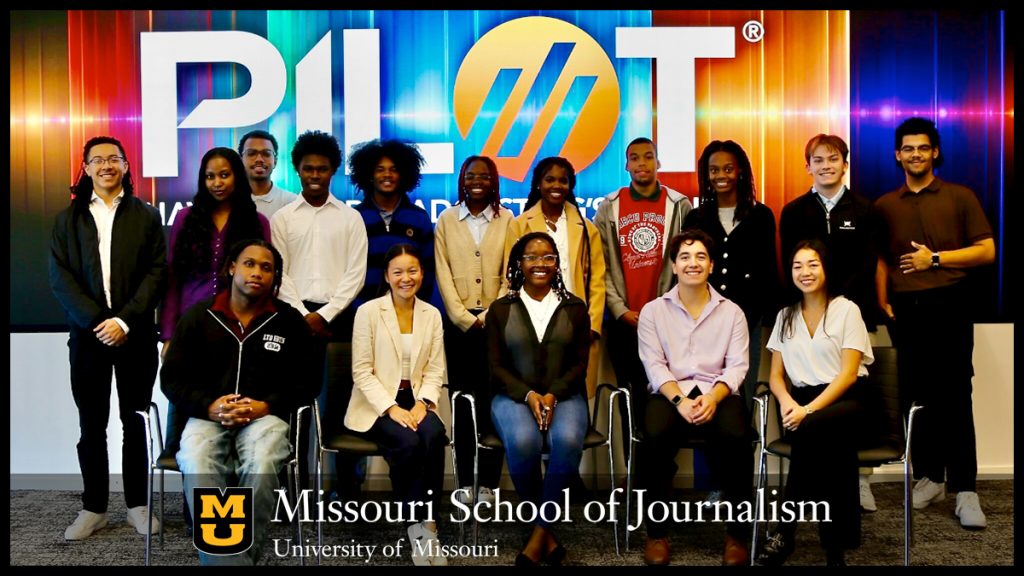
Lainey Hogg (first row, second to left) and Isaac Lewis (second row, far right) gather with their teammates and other fellowship cohorts from different universities across the country.
COLUMBIA, MO — For three years, the School of Journalism has worked with the National Association of Broadcasters (NAB) to develop and understand ATSC 3.0, a new, interactive form of broadcast technology. This year, the focus was to highlight the life-changing research produced on Mizzou’s own campus.
“[ATSC 3.0] is not brand new, but [the NAB is] trying to create a new standard,” said Jim Flink, professor and chair of strategic communication, who leads the project. “It’s basically the integration of your computer signal and your television signal to create vertical content that is stackable.”
Although this technology is limited to bigger cities and not yet in Columbia, Flink encourages the hands-on learning experiences of the Missouri Method by facilitating the fellowship with the NAB and exposing students to up-and-coming technology. Flink’s student team includes journalism students Isaac Lewis and Lainey Hogg, who are responsible for interacting with and creating content for the ATSC 3.0 channel that educates and informs their local community.
“We are going to be focusing on the Missouri University Research Reactor (MURR) and really try to highlight all of the research that is coming out of it and who it is helping,” said Lewis. “[MURR] creates active ingredients that are used for a lot of medicine, which is used to treat [things like] pancreatic cancer and prostate cancer.”
Despite creating localized content, Lewis and Hogg’s work has national impacts. In October, they attended a fellowship orientation in Washington, D.C., where they were briefed on the project and technology. In Washington, Lewis and Hogg met with cohorts from other universities, discussed topics, and saw and interacted with finished products from previous years.
“One of the things we’re wanting to create is an interactive map so that you could pop over and look at the parts of Missouri that have higher rates of thyroid cancer and things like that to see if your location is more at risk,” said Hogg, a strategic communication graduate student.
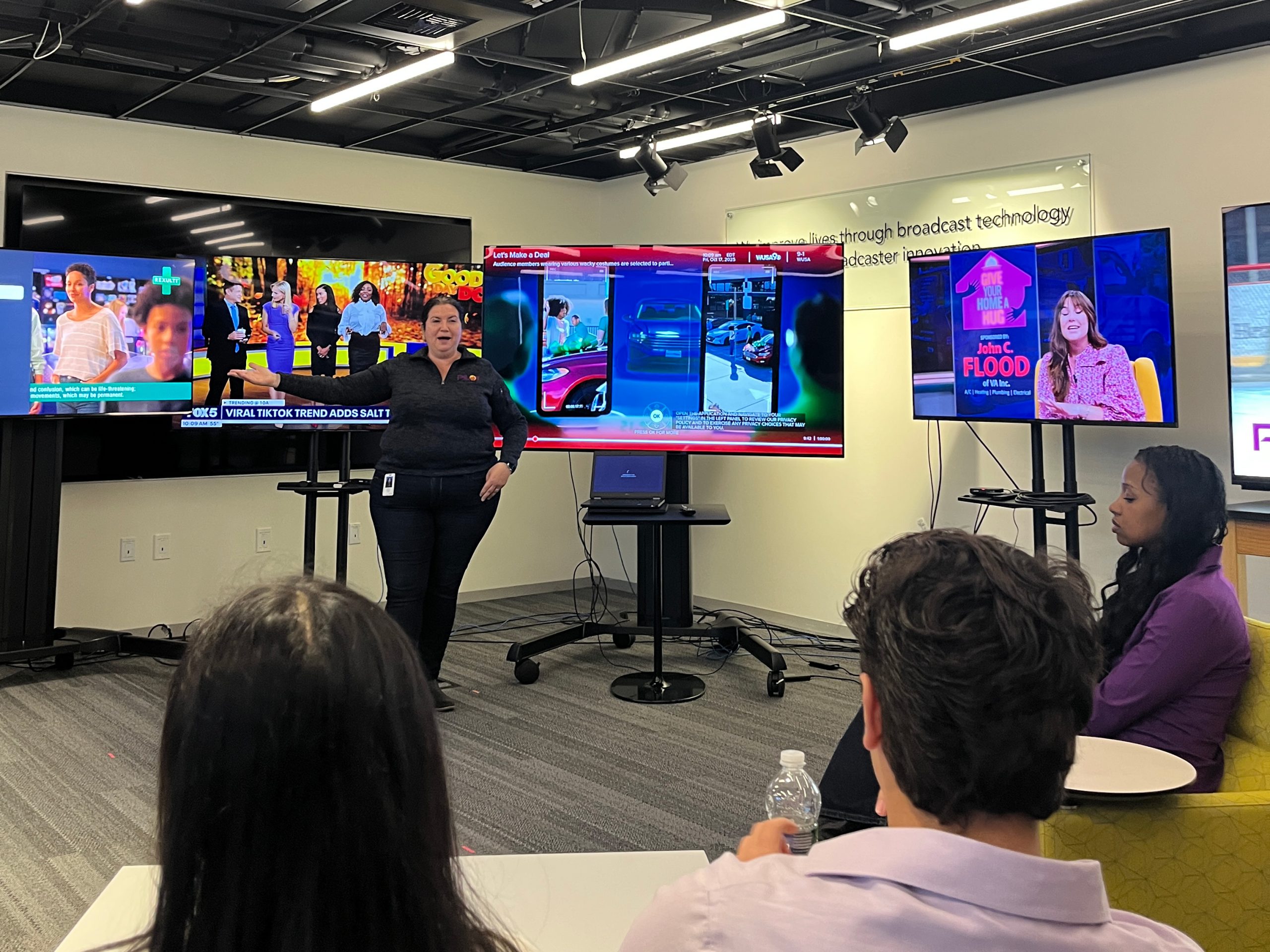
Their content style is layered, intended to primarily inform on the TV while then allowing viewers the option to engage to learn more through interactive graphics or videos that provide additional information.
“Mizzou is one of the only producers of this ingredient [that is used for cancer medicines],” said Lewis. “The goal is to make all of this information much more accessible, focusing on the storytelling so that it’s engaging to people, while doing it on a bigger scale and showing the value that this research has.”
Their work will culminate later this spring at the NAB Convention in Las Vegas. At the convention, the NAB will introduce the fellowship program and give the floor to Lewis and Hogg, where they will share their work with 50,000 convention attendees.
While Lewis and Hogg are the brains to creating and fulfilling content strategy, they work side-by-side with engineering students Victor Onyeacho and Jordyn Shaw who help move their project along on the technical side.
“[ATSC 3.0] pushes storytelling and content strategy in total, but then also it really does highlight everything that is coming out of Columbia,” said Lewis. “It shifts its focus from just being a university town to it being a town of research and [showing that] the University is a place that is actually really pushing for healthcare.”
By using innovative technology, Lewis and Hogg are exploring their field in a deeper way than a typical classroom may permit. Moreover, they are helping to pave the path to make the ATSC 3.0 broadcast channel more accessible in Columbia, encouraging the technology to break out of big cities and function everywhere.
“I am very excited to create [and] have the opportunity to educate our Missouri community,” said Hogg. “[The ATC 3.0 channel is] never something that I’ve interacted with before, so it was really fun to see all of the possibilities.”
Updated: February 2, 2026