Former Watchdog Writers Group fellow publishes book on drug rehab system
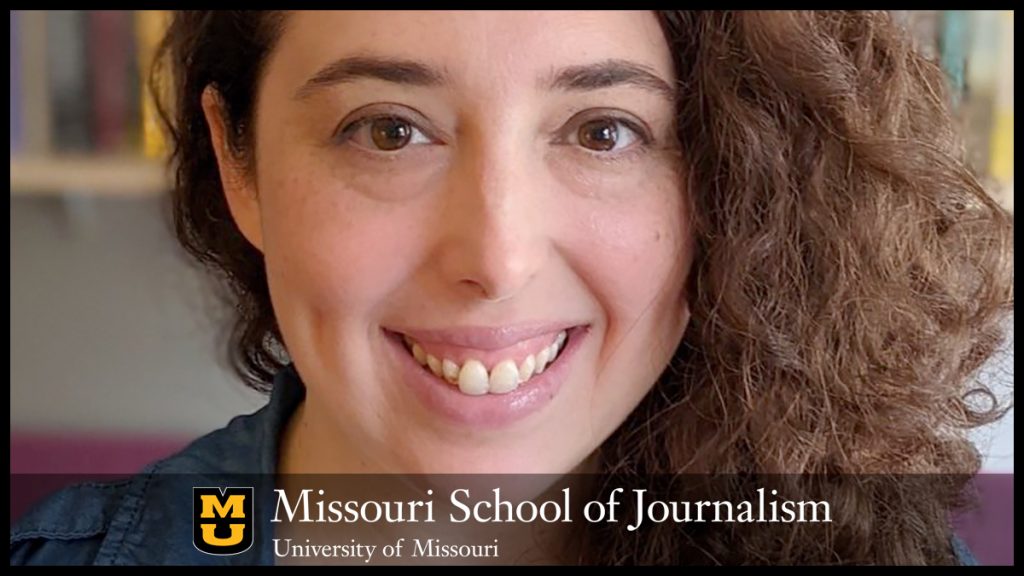
COLUMBIA, Mo. (Dec. 10, 2025) — In August, former Watchdog Writers Group (WWG) fellow Shoshana Walter published her book, Rehab: An American Scandal, after spending more than six years examining drug rehab treatment programs across the country. The book follows four people, all with completely different backgrounds, as they experienced what Walter calls a broken rehab system that left them worse off than when they started.
Walter was a fellow of the WWG in 2022-2023, when she reported her book with the assistance of Missouri School of Journalism student researcher Kelly Dereuck, BJ ’22, MA ’23. Based at the School of Journalism, the WWG pairs fellows with graduate students who serve as reporting assistants and gain research experience. Applications for paid researcher positions for Missouri School of Journalism students will open in the Spring. Contact WWG Program Administrator Kristen Davis, KristenDavis@missouri.edu, for more information.
Walter’s reporting focuses on what she describes as the national failure to face drug addiction and rehab with empathy. She puts people dealing with addiction at the forefront of her book, looking into the personal lives of Americans who are often reluctant to publicly share their stories. Her book “shines vital light into dark places,” according to a review in The New York Times. Walter “forces us to look” at people struggling with addiction with respect, deserving a second chance, according to a review in ScienceNews.
Walter is a criminal justice reporter for the Marshall Project and a finalist for the Pulitzer Prize in 2018 for her reporting on the American Rehab Podcast.
As part of the Missouri School of Journalism’s commitment to fostering investigative reporting and training future journalists, we spoke with Walter about her work and experience as a WWG fellow.
LeBeau: What got you into journalism?
Walter: I’m someone who has always believed strongly in social justice and calling out when I see someone who’s being hurt. I also have always loved writing. When I went to college, I liked writing fiction and poetry, so I tried to get into one of the few fiction writing classes, and it was full, so I couldn’t make it in. And then my mom suggested journalism, and I was like, ‘Oh, I don’t want to do that,’ but I begrudgingly signed up and then in that journalism class, I just fell in love. I love interviewing people and hearing people’s stories, and I realized that I could marry my interest in writing with my interest in social justice.
LeBeau: You specialize in social justice and public health, and your book is on drug addiction and rehab centers. What got you into that specific realm of reporting?
Walter: I started my career as the night shift crime reporter at the Ledger in Lakeland, Florida. I didn’t go into my journalism job search looking for a crime reporting beat. I was very intimidated by it at first, but I realized that I actually really liked the beat of criminal justice, and there are a lot of issues that I was interested in reporting on that intersect with the criminal justice system.
About eight years ago, I was a reporter at Reveal from the Center for Investigative Reporting, when I was asked by my editor to do some reporting on the court system. I started looking at drug courts and diversion court programs that have gained a lot of popularity over the past 10, 20 years, but really are rarely given much scrutiny by journalists.
I just kind of stumbled across this rehab program that was being utilized by courts throughout Oklahoma and Arkansas that I learned has been founded by a former poultry industry executive and was sending rehab participants to work without pay at for-profit chicken processing plants. They weren’t getting paid, and this was predominantly their sole form of treatment in this program. This totally caught me by surprise. I wanted to understand how common that is. And that opened the door to this book.
LeBeau: Did you face a lot of pushback when you were trying to dig around and find things? What obstacles did you face with your reporting and how did you navigate that?
Walter: It was very challenging reporting because what we discovered about that particular program and many others like it is that they tend to be unregulated. There’s no way to even determine how many of these types of programs exist through a records request. We had to develop a methodology to figure that out.
One way we collected program names is by joining Facebook groups and mining human sources for information about what programs they knew existed…We searched 501(c)(3) filings for mentions of rehab recovery and other certain keywords like vocational training or work therapy. In total, we amassed this spreadsheet of thousands of program names that all seemed like they might require uncompensated work of some kind. I created survey questions for each program so that we could collect certain data and confirm what type of program this was.
I think we ultimately found about 60,000 people go through a program like this every year, and we published the names of all those programs in a database that anybody could search. It was a big, multi-year reporting effort. It culminated in a podcast series called American Rehab.
LeBeau: You go very in depth with the four different subjects of your book, about their experiences, their family history, and their family members. How did you go about finding these sources, and how did you build those relationships?
Walter: It was a long process. One of the people in my book, Chris Coon, is someone I met while working on the podcast series. He attended this program called the Center Core Foundation and was court ordered into the program. He felt very strongly that his civil rights had been violated, but he was a little skeptical about the journalism process, about reopening the wound. Over time, he opened up more. He gave me a lot more of his time and I spoke with both of his parents.
I knew I wanted to cover the problems that exist in our system for low-income mothers who have the hardest time accessing treatment. When I interviewed April and heard her story, I realized she is an incredibly powerful speaker and writer.
LeBeau: What was the reaction to your book when it was published?
Walter: What’s been interesting is to see how many people in the treatment industry seem to really care about this book and agree with the book. They’re citing the book as part of a call for change. The other major audience that I’ve heard from are people who’ve gone through rehab themselves or their parents and loved ones. A lot of people have read the book and feel like it’s very accurate, which is sad that so many people have had such horrible experiences in our treatment system. But it’s also heartening to know that the book is validating people’s experiences and helping people speak up about it. I’m hopeful that this book will help to continue to stimulate conversation around our treatment system.
LeBeau: Is there anything else you’d like to add?
Walter: I have to give a shout out to Watchdog Writers Group, because it was an incredible program. I gained an incredible community of fellow book authors who have continued to be so supportive on this journey, and I had the help of a fantastic student researcher. She’s no longer a student, but Kelly Dereuck was fantastic. She was truly an incredible researcher, and I couldn’t have done some parts of the book without her. So, I think it’s a great program, and I highly recommend it to other authors and student journalists. It was a great experience, so I’m very grateful.
About WWG
Established in 2019, the Watchdog Writers Group has a dual mission: to support authors as they write a deeply reported nonfiction book in the public interest while training the next generation of young reporters. The program was launched with a $1.1 million grant from the 11th Hour Project, the grant-making arm of The Schmidt Family Foundation, which continues to support the program. The WWG also receives generous support from the William T. Kemper Foundation and the Banjo Fund, both based in Missouri.
Updated: December 11, 2025