Barbara Cochran to be presented with honorary degree during Missouri School of Journalism’s May commencement
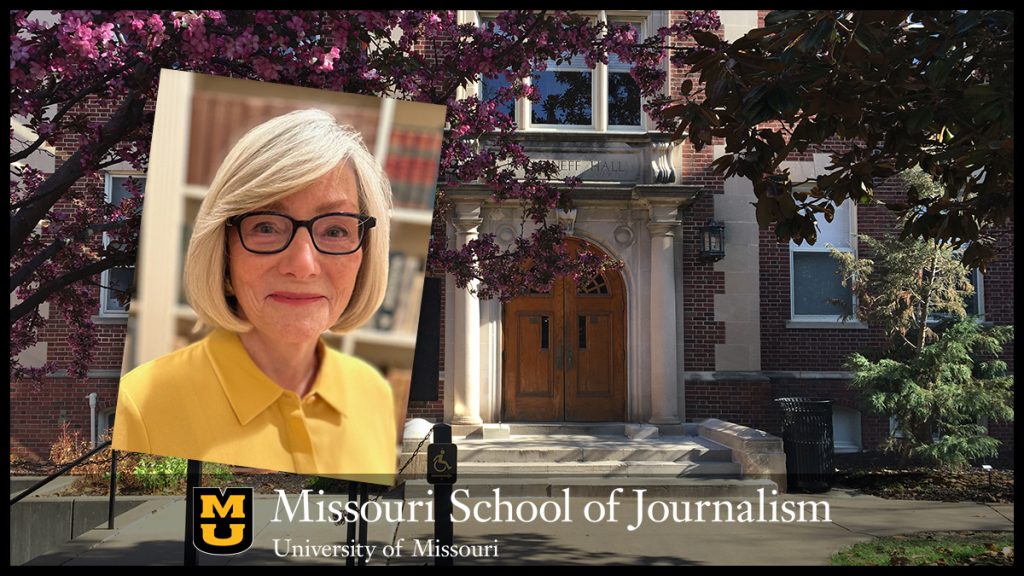
Editor’s note (May 15, 2026): Barbara Cochran is unable to attend this year’s commencement ceremony. We look forward to rescheduling so she can receive her honorary degree at a future celebration.
COLUMBIA, Mo. (May 12, 2026) — The University of Missouri will award an honorary Doctorate of Humane Letters to Barbara Cochran, an esteemed political journalist, editor and news executive and a Missouri School of Journalism professor emeritus, during the School’s commencement ceremony on May 15.
The honor recognizes a career that progressed from the copy desk of an afternoon newspaper to leadership roles in some of the nation’s most influential news organizations and programs. Those roles included executive producer of NBC’s “Meet the Press,” Washington Bureau chief at CBS News and president of what was then called the Radio Television News Directors Association (now RTDNA).
Later in her career, Cochran brought the insights and connections from her time as an influential news leader in the nation’s capital to the School of Journalism, where she led the School’s Washington Program for nine years as the Curtis B. Hurley Chair in Public Affairs Journalism before retiring in 2019.
“What an honor — it’s really amazing,” Cochran said, quipping, “I’ve told everyone they have to call me Dr. Cochran now.”
A wide-ranging career
Cochran’s entry into journalism was a pivot from her initial academic interests. While studying English literature at Swarthmore College, she had considered a career in academia or as a librarian. However, her advisor noted a telling discrepancy in her focus: she was dedicating significantly more time to her role as editor of the college newspaper than to her formal coursework.
“He said this might be a sign of where my true interests lay,” Cochran recalled.
Following her advisor’s guidance, she enrolled in the graduate program at Columbia University, finishing her master’s degree in 1968. It turned out to be a year of unprecedented upheaval in the United States, marked by the Tet Offensive in Vietnam, a chaotic presidential election and the shocking assassinations of Martin Luther King Jr. and Robert F. Kennedy. Witnessing these events, which were accompanied by protests and social unrest on an international scale, solidified her desire to work at the center of national discourse.
“I wanted to have that front row seat that you get as a journalist to history being made,” she said. “I felt what journalists were doing was so consequential. I mean, these were unheard-of, life-changing events, and journalists were there to record and tell the story.”
Cochran didn’t have to wait long for that front row seat. As a junior city editor at the Washington Star — the leading afternoon newspaper in D.C. when she began working there in the late 1960s before ultimately becoming its managing editor — she found herself involved in reporting on one of the 20th century’s most monumental political scandals.
“I was on the desk at a very early hour, and I checked with the police reporter about what news had happened overnight,” she said. “Was there anything we would want to do a story about? And he mentioned that some burglars had been arrested in the Democratic National Committee’s office in the Watergate Building. I said, ‘Oh, that sounds interesting.’ So we did publish the story, and I was involved in editing all the stories about it and working with the reporters who covered it. Talk about history.”
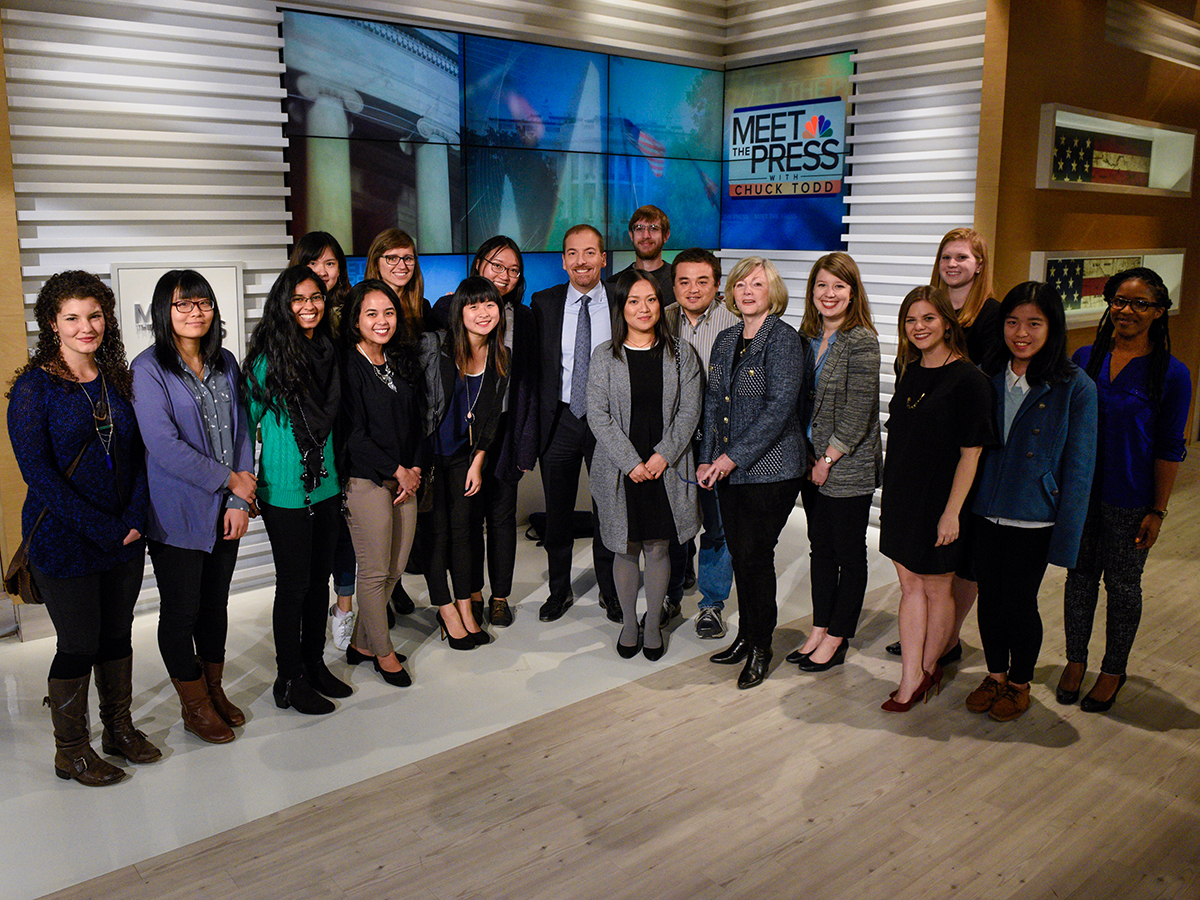
Her career trajectory was defined by the ability to transition between print, radio, and television news at a time when moving so fluidly between mediums was rare. Before her stints at NBC and CBS, she moved from the Washington Star to NPR, where as vice president for news she was instrumental in the launch of “Morning Edition.”
Her flexibility proved to be one of her strongest assets. She remembers the scramble to adapt at “Meet the Press” when a planned broadcast with House leadership had to be discarded following the infamous Challenger space shuttle explosion.
“Initially, you’re reluctant to throw away your plans, but we realized within 24 hours that we were going to need to change our plans, and we did,” she said. “If you’re in the news business, you have to be ready to tear things up and start all over again.”
Cochran’s jumps between news mediums might have been unusual for the time, but they were not random. Her career had a way of building naturally on itself. When she became president of RTDNA, her cross-platform experience gave her an advantage that she said allowed her to step out from behind the scenes and emerge as a public-facing advocate for the industry. While forging connections with journalism educators over the course of 12 years in that role, her next leap became clear.
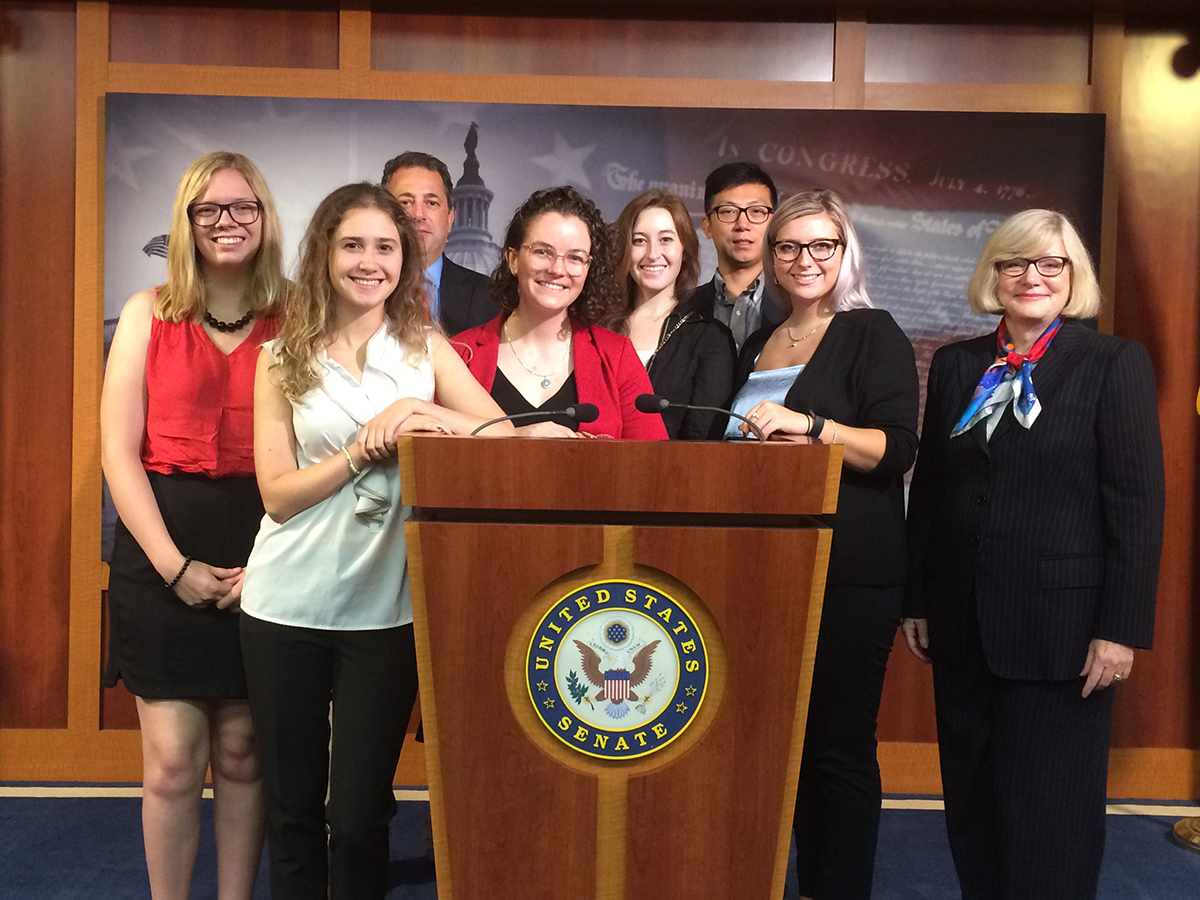
Taking the reins of the School of Journalism’s Washington Program, she helped students gain hands-on experience in the country’s nerve center of political journalism while leveraging and expanding the influence of a network of alumni working in the city.
“I loved the interaction with the students, but I was also representing Missouri’s journalism school in the professional community here in Washington,” she said. “Everything was like a steppingstone to that position. Here is this storied journalism school with a storied Washington Program — wouldn’t that be perfect?”
It might come as no surprise, then, to learn she has some advice to students about the realities of career evolution, drawn in part from her experience at Columbia University. Upon enrolling, she intended to specialize in magazine journalism, hoping to land a coveted editing role at Harper’s Magazine.
“That turned out to be the one thing I never did,” she said. “When I was at school, I discovered that I really liked breaking news. You just never know where your career is going to lead, so I would say, don’t worry so much about what your first job is, because you never know where it might take you. These things all build on each other, and you have a chance to learn something all along the way.”
A new journey
Cochran’s career has featured plenty of trailblazing; as a woman trying to enter the male-dominated news industry in the 1960s, media organizations were initially far more interested in hiring her as a secretary. Now, having helped forged a path for women who followed in her footsteps, she has her sights set on a different kind of trailblazing.
Since retiring from her faculty position, Cochran has dedicated her time to the Fallen Journalist Memorial Foundation as its president. The foundation is working to establish a first-of-its-kind memorial on Washington’s National Mall dedicated to press freedom and journalists who have died while reporting.
The memorial will represent what Cochran considers a vital piece of her legacy.
“I think about the fact that there will be a memorial where people can visit and appreciate what it is that journalists do — the contribution that they make to democracy,” she said. “It’s built on the things that I’ve been doing my whole career in support of press freedom, in support of journalism as a pillar of democracy.”
It’s a mission that goes hand in hand with what Cochran plans to emphasize to students during her commencement remarks.
“You may not be saving lives like they do on [TV show] The Pitt, but you are saving democracy,” she said.
Updated: May 15, 2026