Food for thought: Missouri School of Journalism students search for soul of food culture with podcast series, ‘Who Owns the Flavor?’
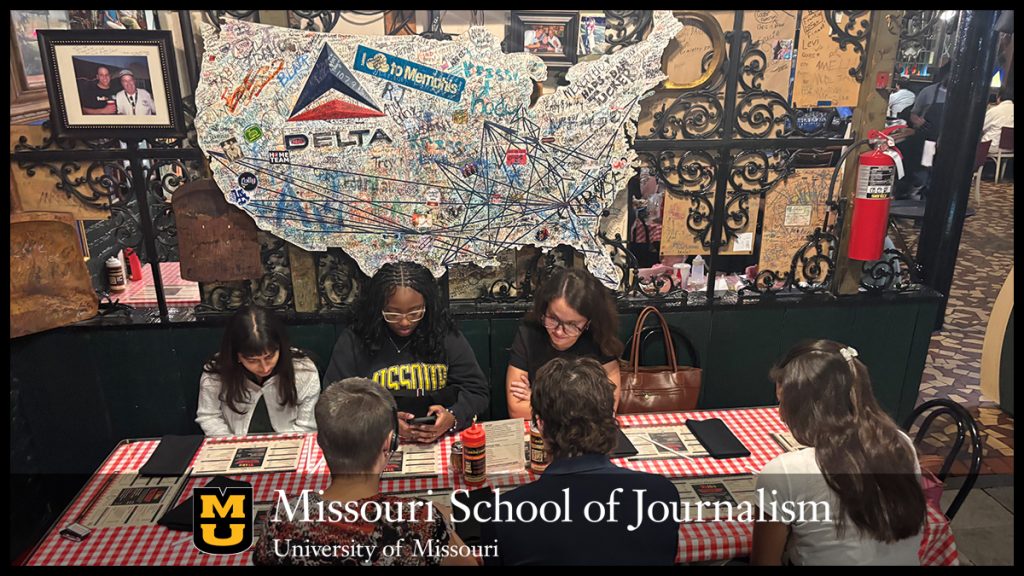
The students prepare to order at Charlie Vergos’ Rendezvous, a famous Memphis barbecue restaurant known for its unique dry-rub ribs.
COLUMBIA, Mo. (Feb. 5, 2026) — Seniors in Professor Ron Stodghill’s capstone Journalism Reporting Projects course lived the lives of travel writers last fall, embarking on a tour of New Orleans, Memphis and The Hill neighborhood of St. Louis. After speaking to acclaimed chefs and barbecue pitmasters, the Missouri School of Journalism students produced a three-part podcast with additional written supplements called “Who Owns the Flavor?”
The series explores how the history and culture of food in these three renowned “foodie” destinations intersects with issues such as gentrification and economic upheaval. All the while, each episode navigates thorny questions around what constitutes authenticity and who “owns” the flavors that continue to form the foundations of these thriving food cultures.
“Food is so interesting to me because it’s a place where identity politics converge with capitalism, with the court system,” said Stodghill, who leveraged his many years as an author and journalist for publications like The New York Times and Time to help connect students with sources for the project. “It’s a rich playground for a journalist to be able to start trying to understand a market that a lot of cities hang their hat on. And the question is, how fair is that market system?”
Regardless of the subject matter, student’s in Stodghill’s class gain experience in producing content in a variety of mediums, from podcasting to magazine writing. But to investigate the phenomenon of local food cultures properly, Stodghill knew his students needed to set foot in these cities and speak with people in person. So he rented a van and took them on a 1600-mile roundtrip with stops in New Orleans and Memphis.
![Ron Stodghill [far left] and his students with James Beard Award-winning chef Sue Zemanick [fourth from the right] at Zasu, a Michelin-recognized restaurant in New Orleans' Mid-City neighborhood.](https://journalism.missouri.edu/wp-content/uploads/2026/02/flavor26020502.jpg)
In New Orleans, they visited famous, family-owned culinary institutions like Dooky Chase — an historic fixture of the city that also became an important gathering place during the Civil Rights Movement — and Lil’ Dizzy’s, launched by Wayne Baquet, Sr., brother of former New York Times Executive Editor Dean Baquet. They also spoke with chefs and chefs-in-training at the nonprofit New Orleans Culinary & Hospitality Institute. Everywhere they went, they learned more about the soul of a city that embodies its history in each plate of richly spiced food.
“Every interview we had was amazing,” said Lola Jahant, then a Meredith Fellow under Stodghill’s Meredith Chair in Service Journalism and the project’s student coordinator. “They were sharing a lot about [2005 hurricane] Katrina and how they were trying to use their restaurants to bring people back together.”
That idea — food serving as a bridge between people or between history and the present — became a central theme of “Who Owns the Flavor?”, cropping up in each city the students visited, and that focus is resonating: the New Orleans branch of the series has already been published by New Orleans Public Radio station WWNO.
But while New Orleans exposed the students to city’s trademark blend of Creole and Cajun flavors, Memphis was all about barbecue. As such, the students sought out pitmasters like Merrit Bailey, owner of the highly rated Ballhoggerz restaurant, and the Greek family that operates Charlie Vergos’ Rendezvous and claims to have invented Memphis-style barbecue ribs.
“[Bailey] talked about how barbecue has been a way he’s stayed tied to his community,” said Sophia Anderson, who, like Jahant, had been to New Orleans before but had never visited Memphis. “I thought that was very powerful, and I love the parts of that episode that get into the history of barbecue in the area and the historical Black communities there.”
The students arranged their own visit to St. Louis’ The Hill, an historic Italian-American community known for its Italian food and its status as the hometown of several notable professional sports players, including Baseball Hall of Famer Yogi Berra. It’s also the hometown of toasted ravioli, though locals disagree about which restaurant — Mama’s or Charlie Gitto’s — actually owns the distinction of being the first to serve the famous St. Louis dish.
In St. Louis, as in Memphis and New Orleans, the local favorites — once accessible only in person at specific restaurants — are now often available nationally. “Memphis”-branded barbecue sauce is on supermarket shelves all over the country, and Rendezvous ships its meals to customers throughout the U.S. and Canada; The beignet, a New Orleans café staple, is now available at Costco in 22-packs; And toasted ravioli is not hard to find in the frozen section of the supermarket.
The podcast grapples with the questions that arise from the spread of these flavors beyond their place of origin. But in the tradition of great audio storytelling, it focuses not on division, but on conversation. In fact, Stodghill’s favorite memory of the whole experience comes from the culinary institute in New Orleans, where an interview opportunity turned into something more — an enlightening conversation between two giants of their respective industries.
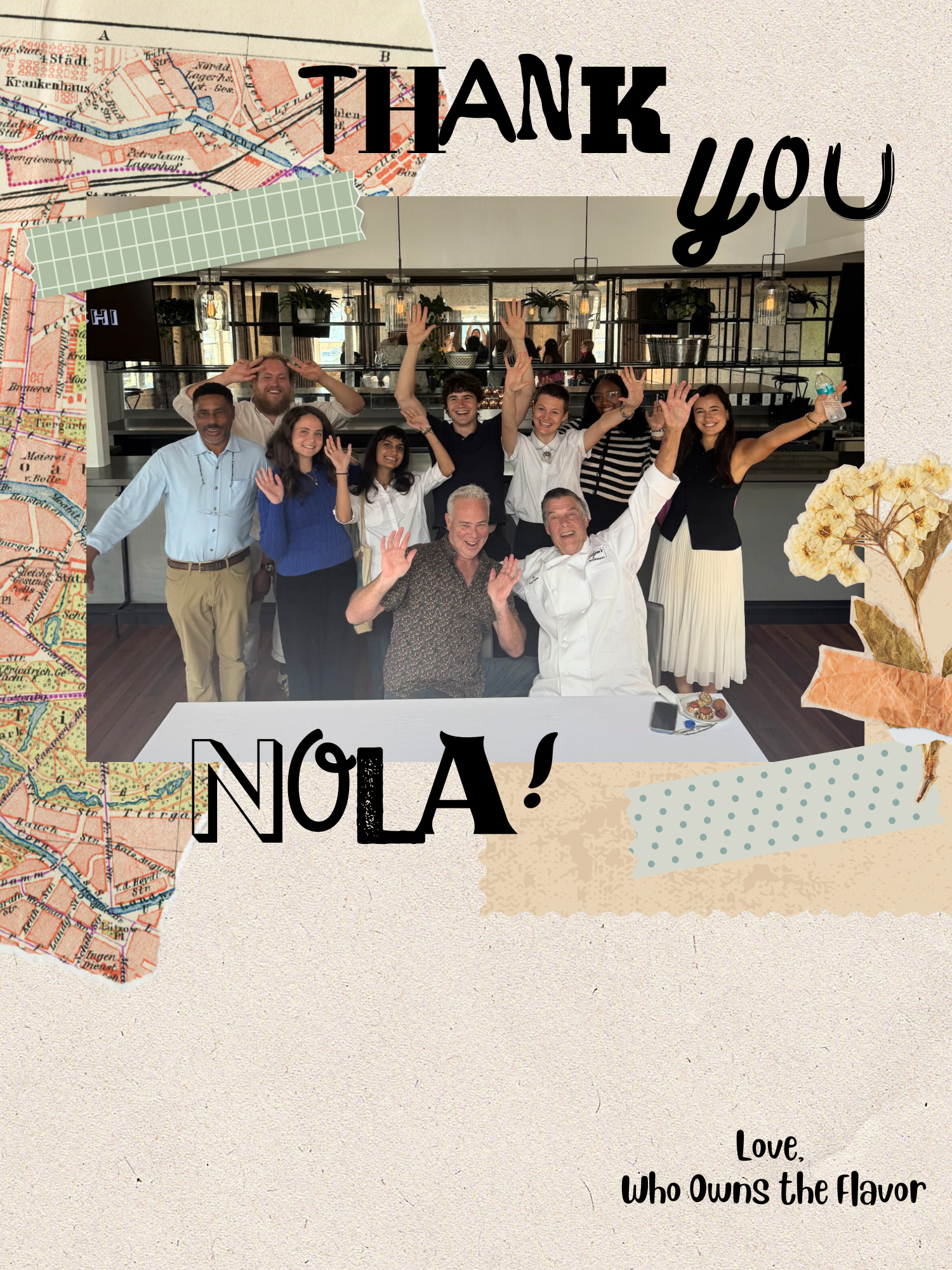
“We were all in this educational center with a famous food writer and a famous chef, and they just wound up in a very thoughtful riff,” Stodghill said. “You could feel that they were highly engaged, that the students had sparked the right questions. It was a moment when I knew we had made a mark with the project. We took a photo because you could tell at that moment that it felt historic.”
“Who Owns the Flavor?” is available as a podcast here and with additional articles delving deeper into stories from each city here.
Updated: February 5, 2026